
The 2026 Home Design Trend We Are All Hungry For Has Arrived

Introducing Authenticism
I’m going to say something out loud that a lot of us who live in these houses already know.
It’s our time. Not because we made it so — but because we never stopped being who we were.
I’ve been watching this for a while now. In open houses. In the way people stand still in certain rooms. In the way their hands go to old trim before they’ve even looked at the floors. In the questions they ask that aren’t about square footage or quartz, but about what stayed, what was saved, what many someones over the years took the care not to erase.
Meanwhile, the design world is heading into 2026 doing that polite thing it always does when something real is happening. Everything is a “trend.” Everything is “having a moment.” Nothing is allowed to be wrong. Grey and white and plaster and tapestries and powder blue all get lumped together so nobody has to take a stand.
But that isn’t what I’m seeing.
What I’m seeing is people turning away from rooms that feel ironed flat and leaning into spaces that carry weight. Texture. Age. Memory. Not the haunted-house version of old. The lived-in, held-together, still-standing version.
So I’m going to name it.
I’m calling it Authenticism.
Not the social-media version of authenticity. The domestic one. The way people choose to nest when they’re tired of surfaces and want something that feels like it was here before them and will be here after.
Authenticism is a return to good old things.
Not decay. Not faux ruin. Not the look of history. The real thing — wood that still looks like wood, brick that still looks like brick, glass that bends the light because it was poured by hand and not stamped by a machine. Floors that show where people walked. Trim that still remembers who brushed past it.
It’s about leaving the wrinkles in.

If you’ve ever tried to straighten your hair in New Orleans humidity, you know exactly what I mean. You can spend all the money in the world trying to press it into something sleek, but it’s going to fight you. And the truth is, that fight is where the beauty lives. The texture is the point.
That’s what Authenticism looks like in a house.
We’re done pretending everything should be smooth and white and anonymous. We’re done sanding the story out of rooms. We’re done coating places in fondant and calling it taste.
And the truth is, New Orleans never fully bought into that anyway.
A Fork In The Design World
Everyone who recoiled at Pantone's Color of the Year will feel this in their color-of-the-year bones.
There are two broad ways people have always shown what they care about.

One is through what’s obvious. New. Shiny. Easy to read from across the room. It’s the impulse that built the Garden District and Esplanade Ridge more than a hundred years ago. It’s what still builds skylines now. Glass towers, marble lobbies, the newest version of whatever the market says is best. That way of living isn’t shallow — it just wants to be seen.
But there’s another way.
It shows up in what people choose to keep. In the things that don’t announce themselves. Original vinyl instead of a streaming app. A table that’s been fixed more times than it’s been replaced. A door that’s been opened by a hundred years of hands. Books with cracked spines. Rooms that don’t photograph perfectly but feel right the second you step into them.
That kind of value isn’t about showing off. It’s about belonging to something older than you are.
And right now, in a world that’s getting faster than most of us can metabolize, more and more people are leaning toward that second way. Not because they hate technology — most of us love it — but because when everything gets smooth and optimized, we start wanting the opposite at home. We want texture. We want weight. We want something that resists being ironed flat.
That’s why Authenticism isn’t just a look. It’s a correction.
We've Been Here Before
We’ve seen this swing before. After the Industrial Revolution filled homes with cheap, identical things, the Arts & Crafts movement pushed back toward wood, joinery, and the visible hand of the maker.
After World War II and the spread of tract houses, people started bringing nature back inside — wood paneling, stone, plants, rooms that felt like they had a pulse. Frank Lloyd Wright had his moment in the sun, quite literally. Not because he wasn't doing brilliant work outside in designs prior, but because the world embraced them.
After the dot-com boom and all the Y2K tech fear, we got the Maker Moment: Etsy, knitting, pottery, Edison bulbs — all of us reaching for something we could actually touch. It felt good to make something because touch is both understood and under control.

Now we’re here again.
The tools are more powerful than ever. AI can stage a room in seconds. You can buy anything in two clicks. Things arrive at your door that you don't remember purchasing. And because of that, what people are starting to want isn’t convenience — it’s presence. Not faux-old. Not “heritage inspired.” The real thing. The find. The piece that took time.
That’s Authenticism.
And if you live in New Orleans, you’ve been living inside it the whole time.

We didn’t stumble into this.
New Orleans didn’t keep these things quietly or politely. We fought for them. We rescued them more than once. We organized. We showed up. We argued with developers, city councils, and ourselves. We saved what other places bulldozed, sometimes because we had to, and sometimes because we knew better.
Our houses are made from Tennessee trees that floated down the river as flatboats. They carried furniture and goods south when this city was booming but not yet fully built, and when they couldn’t fight the current back upstream, they were taken apart and turned into beams and floors.
Swamp timber came out of what used to be the back of town, floated down Carondelet when it was still a canal, not a road. Bricks were fired from Mississippi mud and Northshore clay. St. Augustine Church was built in 1841 on the site of one of the city’s first brick yards. St. Joe’s bricks came from Liberty Bayou. Even now, when a house gets stripped back to the bones, you can see how much work went into just getting the materials here.
That’s what people mean when they say a house has good bones. We’re not talking about squares or straight lines. Right angles are scarce in these old homes when you look closely.
We’re talking about studs that run two stories tall, cut from whole trees, like Larry Schneider of Schneider Construction pointed out to me just yesterday. That kind of material doesn’t exist anymore. Those bones weren’t stamped out. They were hauled, lifted, and set by hand.
And people who live in these houses feel that in their bodies.

We've All Felt It
That’s why there’s such a quiet current of anxiety running through historic neighborhoods. It isn’t about money. It’s about watching someone buy a place and gut it. Watching pocket doors tossed into a dumpster like the shooing of a stray. Watching hand-hewn trim get replaced with something smooth and hollow. Those old pocket doors might be worth a few thousand dollars each, sure. But what people are really losing is the sense that they were always meant to live there. They belong in their home.
That’s the soul people are afraid of losing.
We see it every week. We took buyers through a house in the same neighborhood as some of our own listings not long ago. Everything had been stripped. Everything was done quickly. Everything made blank. And the sellers were asking a price that suggested all that erasing had somehow added value. It hadn’t. It had stripped the value out the moment it happened. Sure, a buyer could go back to salvage yards, mill new things the old way, try to rebuild what was lost. But why would they do that on top of paying a premium for something that had already been hollowed out?
That’s what Authenticism is pushing back against.
It isn’t about freezing houses in time. It’s about carrying them forward without forgetting who they are.
We knew this before the numbers ever showed it. We felt it when someone suggested dipping an entire historic interior in white — trim, walls, ceilings — like a nail dunked in paint. It would have looked immaculate. It would have photographed well. And it would have felt wrong. Like fondant on a cake that called for rich buttercream. So we held the line. We kept the old. We fixed what needed fixing. We brought modern color into an antebellum palette. We let the belle of the ball be herself again.
And people felt it.

One couple who toured a place hailed from Napa and Haight-Ashbury and called it a major contender — or it would have been, if we hadn’t just help them buy a gorgeous Queen Anne with all the old trim still intact. An uptown agent looked around and said, “Why didn’t you paint more of this?” and what she really meant was, “This isn’t how I live.” Not, “This was a mistake.” My own niece, who can’t wait to leave Louisiana for college, stood in a room and said, “Stay close to this one, Elisa. In ten years I want it to be mine.”
That’s how you know something is working.
People aren’t responding to staging for stagings sake. They’re responding to the story the house is telling them.
When an architect with a famous historic address on St. Charles asked us about a paint color because it felt like it belonged there. When people ask if that mural is original. When they start writing their own history into the space without being prompted. That’s Authenticism doing what it does best — letting a house show how it lives.
We saw it again in a kitchen not long ago. Before, it was glossy white, quartz, nowhere in particular. Clean, sure. But unmoored. So we let the brick back in. We let pattern live. We let it feel like the French Quarter, not a hotel lobby. And almost suddenly, people slowed down. They started picturing mornings and late nights and friends around a table. Not because it was expensive. Because it felt like it belonged.
Which one do you gravitate toward?
You don’t have to answer. Your nervous system already did.
And if you felt something looking at that room — if it made you exhale instead of brace — you’re already inside this.
That’s what Authenticism looks like when it stops being a theory and starts being a place.
We Are Standing At The Mouth of A Major Design Movement
The thing about movements is that you usually don’t feel them when they arrive. You feel them when they’ve already been living in your house for a while.
Authenticism didn’t show up here in 2026. It’s been simmering in these neighborhoods for decades, just waiting for the rest of the country to catch up. We’ve been the place people come when they’re tired of living inside something that looks good on paper and feels hollow in real life. You see it in who moves here and in who stays.
That’s why it makes perfect sense that someone who lives in a glass tower in Miami or books a week at the Mandarin Oriental would want a small, crooked slice of something else here. Not because they don’t love where they live — but because no one wants to live inside flawless all the time. Smooth, bright, climate-controlled spaces are beautiful. They’re also exhausting. So people come here for brick and plaster and floors that slope a little and windows that ripple the light. They come for places that feel like they’ve been held by a lot of hands.
That’s not contradiction. That’s balance.
We're About to Go From Odd to Popular
And it’s why New Orleans isn’t in competition with Palm Beach or New York or anywhere else. We’re the other half of the story. When one side of the world gets shinier, the other side gets more precious. The more everything else turns into glass and quartz, the more a room with old pine floors and plaster walls starts to feel like wealth.
That’s the shift we’re standing inside.
You can already see people trying to imitate it. Faux limewash. Wire-brushed “character.” TikToks mixing cement and color and slapping both on the walls of Midwest ranch homes. Popping ready-made trim backed by adhesive and composed somewhere across the Pacific and shipped by Amazon.
Coming soon to a Lowes by you, new cabinets pretending to be old. AI staging that sprinkles in a little fake patina for flavor. ChatGPT, using words like weathered, artisanal, heritage, story-rich, layered, soulful, and even tech itself, is embracing authenticism.
That stuff will continue coming, and it will be everywhere. But the real thing still reads differently. You can feel it. You can tell when something was made to look old and when it simply is.

And this is where New Orleans has the upper hand.
We don’t have to pretend. We don’t have to buy a story and layer it on. We already have the story written into the walls. Our job — as owners, as neighbors, as stewards — is to not erase it.
That’s why this moment feels charged. People here aren’t just decorating. They’re deciding whether to keep or lose something that can’t be remade once it’s gone.
And that’s where we come in.
We don’t see these houses as inventory. We already see them as chapters. Each one carries the choices of everyone who lived there before — the ones who saved the pocket doors, the ones who patched the plaster instead of replacing it, the ones who kept the old windows even when it was harder.
That’s the lineage buyers are responding to, whether they have the language for it or not.
And when they walk into rooms that haven’t been ironed flat, they recognize it. They slow down. They imagine themselves inside something that feels bigger than a transaction.
That’s not an accident. That’s Authenticism doing what it does.
It doesn’t shout. It doesn’t perform. It just stands there, quietly sure of itself, waiting for someone who knows how to see it.
And more and more people do.
It doesn’t feel like risk anymore. It feels like recognition.
For a long time, loving these houses felt like being part of a small but mighty club — the kind of club where people would nod at you, quietly, because they got it, but mostly everyone else was just smiling politely, clueless.
You kept the old doors. You patched the plaster. You stared at that hand-hewn trim and felt a weird kind of relief that someone once cared enough not to rip it out. But you didn’t quite have language for it yet. You just knew it was right.
That’s starting to change.
Now, when you walk into a room that carries its stories, you get the sense that the rest of the world is about to see it too.
Not because someone screamed it at them. Not because it got packaged as a trend. But because people are already craving what can’t be manufactured.
You’re going to start seeing pieces of this everywhere — HGTV, magazines, influencer feeds — the polite corner of design that doesn’t want to offend anyone. Studio McGee is already putting tapestries on pillows and naming powder blue as having a moment. Plenty of paint brands have six different versions of “heritage” whites. That’s the target-shopper version of old — the one you can buy off a shelf in every suburb in America.
That’s not what we’re talking about.
That’s faux finish.
That’s one-size-fits-most packaged nostalgia.
What you care about — what we care about — is real continuity.
We’re not talking about exposed lath and decay. That’s not beautiful—just tired. We’re talking about things that were made to last, that wear their age like a scar that became a story.
As Dr. John would say, it feels like being in the right place at the right time. And it’s going to feel grand and weird all at once.
You’re going to feel like:
the know-it-all who’s been right all along,
and the steward of something precious,
and kind of delighted that other people are finally noticing.
Be gracious about it. Be generous with your enthusiasm. You didn’t invent this feeling — you just helped keep it alive.
Relaxed minimalism is important. But this is something else.
This is Authenticism.

It’s going to feel strange at first, feeling seen like this.
A little grand. A little awkward. A little like someone finally noticed the thing you’ve been quietly loving your whole life and now won’t stop talking about it.
People will come. Designers. Editors. Influencers. They’ll call it cool. They’ll call it cute. They’ll call it a moment. They always do. They’ll take the parts that photograph best and move on when something shinier shows up somewhere else.
That’s fine.
Because this was never about being precious.
This city has always been a little bit of a theatre kid — earnest, expressive, deeply itself even when no one was watching. We’ve been performing for empty rooms and full streets for a long time. We’ll keep doing it long after the spotlight wanders off.
Authenticism doesn’t need an audience to be real. It just needs people who know how to care for a place.
And that’s what all of this comes down to, in the end. Care. The decision, made over and over, not to rip something out just because it’s old. Not to smooth over what still has a pulse. Not to erase the hands that came before.
If any of these rooms you’ve been picturing stayed with you — the trim that wasn’t sanded flat, the brick that wasn’t hidden, the colors that weren’t bleached into submission — that isn’t nostalgia talking. That’s recognition.
Those spaces are real. They exist right now, in this city. They’re not mood boards. They’re not renderings. They’re houses you can walk into, floors you can feel under your feet.
They're called 723 Esplanade, 2635 Ursulines, and 708 Mandeville.
And yes — they’re for sale. So is what’s inside them, right down to the last lamp, thanks to Perrier Designs and Floor 13, who understand that furniture can carry the same kind of history a house does.
But more than that, they’re proof.
Proof that Authenticism isn’t a theory. It’s already here. Proof that this city never stopped being what the rest of the world is just now remembering it wants. Proof that loving good old things was never out of style — it just took a while for everyone else to catch up.
New Orleans isn’t becoming something else. It’s finally being read for what it is — a place built from real materials, held together by people who cared enough not to erase them, full of rooms that still know how to live.
We don’t know what the world will call this moment yet. They’ll come up with something. They always do.
I'm calling it Authenticism.
And for a city that’s been holding on tight to its good old things for a long time, that name feels just about right.
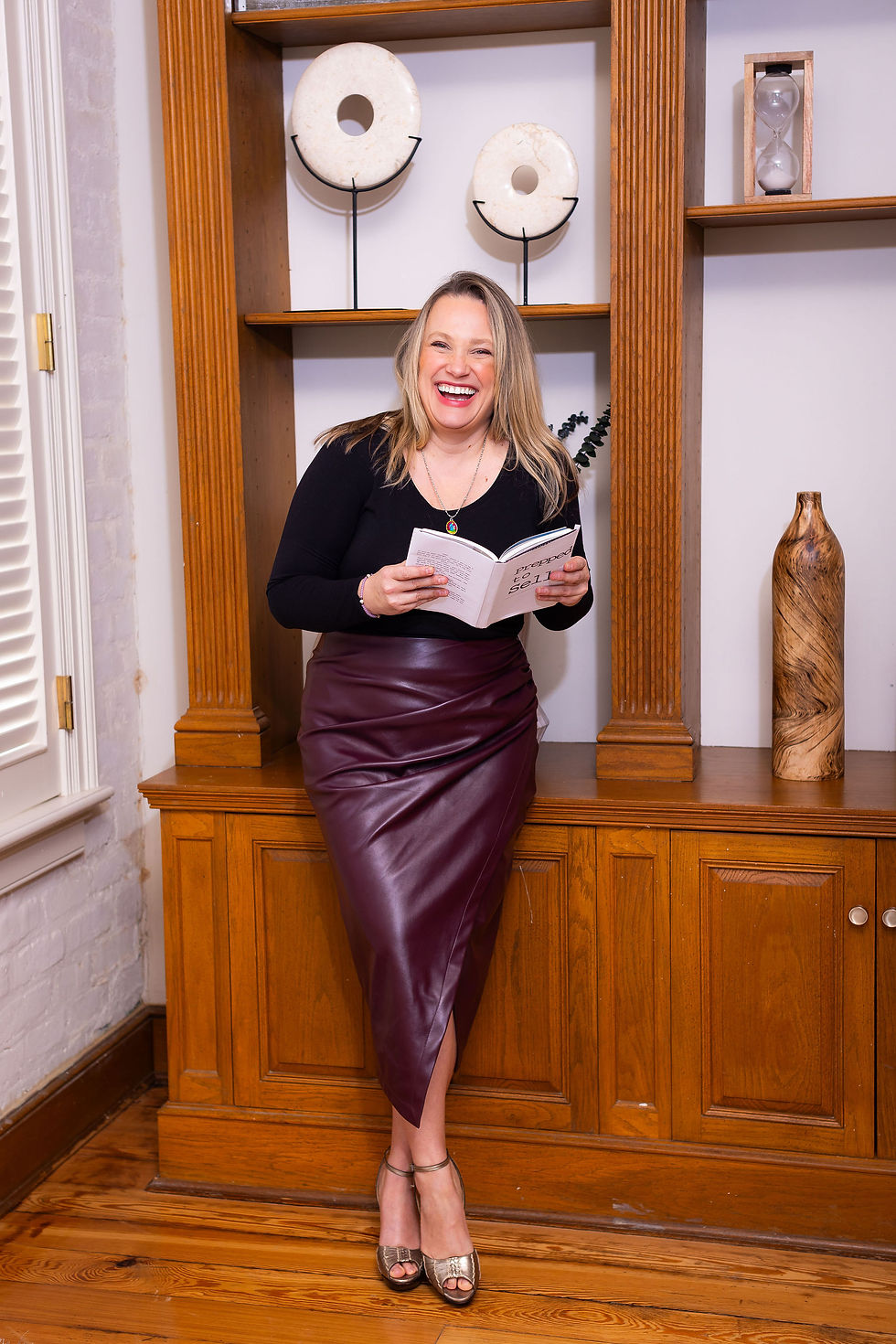
Celebrated for her next-level creative approach to real estate, Elisa Cool Murphy is the author of Prepped to Sell: What Works Even When the Market Doesn't. She is an award-winning, top-performing real estate broker in New Orleans and the founder and owner of Cool Murphy Real Estate.
Contact Her -
email: cool@coolmurphy.com
Facebook: @homeinneworleans
IG: @coolmurphynola
YouTube: @coolmurphynola
phone: 504-321-3194


Comments