
How to List Your Home: What to Tackle, In What Order, & Why
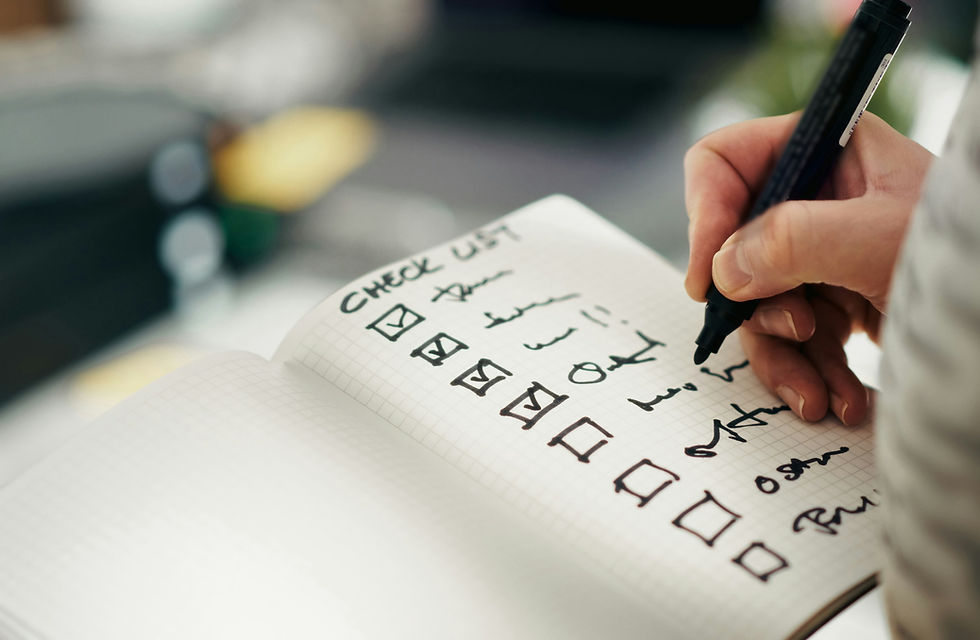
Getting a home ready to sell is not one giant project. The easiest way to waste time—and make the whole process feel much harder than it needs to—is to tackle the right jobs in the wrong order.
If you’re preparing to list your home, work through it in four phases:
Start with the big things: exterior presentation, major repairs, excess furniture and anything affecting how the home feels, flows, or functions.
Prepare for the first impression: get the rooms that matter most ready for photography and early marketing, then remove visible clutter and visual noise.
Handle the smaller and hidden things: minor repairs, secondary rooms, closets, cabinets, and the details buyers will notice once they’re actually inside.
Finish, clean, and build buyer confidence: deep clean, complete the final presentation work, and gather the information buyers may need to feel comfortable moving forward.
The reason for this order is simple: the work that feels easiest to control can feel the best to chip away at first. But it isn't always the work that matters first, and it can cost you money and sleep in the long run.
Here's a short story. A seller recently spent an entire Sunday organizing her beautiful walk-in closet until it looked like a boutique. It looked fantastic. Truly.
She also still needed to finish her living room. Address burned-out lights. And reduce clutter throughout.
The closet wasn’t the wrong project. It was the wrong project for that moment. Because what happened next was photos of the home to market it before listing. And none of those photos would include that beautiful closet organization.
That’s the part sellers usually aren’t told. Preparing a home for market isn’t just a list of things to do. It’s a sequence.

Before You Get Started: Start with Buyer Confidence
Before you lift a paintbrush, a hammer, or a finger. It pays to turn your attention from how the house looks to how the buyer feels about buying it. That distinction matters more than ever.
We are increasingly seeing buyers who want more information, more certainty, and more opportunity to understand a property before they are willing to stay committed to it. Inspection periods can also become a major point of renegotiation—or a place where an otherwise good deal starts to come apart.
That is one reason we’re recommending pre-listing inspections more often for certain sellers and certain properties.
The point is not simply to “find everything wrong with the house.”
It is to know what we are dealing with, decide what deserves attention, document what has been addressed, and give a buyer clearer information before uncertainty starts doing the negotiating for them.
Wouldn't you want to know you've got a foundation issue, or pool leak, or active termites before you invested in plaster repair? We thought so.
We are really good at marketing and positioning, but there is something good marketing and the smartest strategy cannot create by themselves:
confidence.
Marketing can make someone interested. Presentation can make the home feel valuable. Pricing can make the decision make sense. Positioning can help all of these work harder.
But confidence is what helps a buyer keep moving forward after they have said yes.
And in a buyer-favored market, keeping the right deal together matters just as much as getting one in the first place.
List improvements made over the last five years. Pull those warranties out. Make sure your HVAC is serviced. Make sure those policies are current. In short, find receipts, literal or otherwise, for why your home lives, not just looks, great.

Phase One: Start with the Big Things
Think about packing the trunk of a car for a road trip. You don’t begin with the tote bags and loose shoes. You figure out where the giant suitcase has to go first.
Preparing a house works the same way.
Start outside. If the front door needs paint, the exterior needs pressure washing, the landscaping needs pruning or the yard needs attention, deal with those things early. Your exterior may become one of the first images a buyer ever sees, and buyers may drive by long before they schedule a showing.
Why? 98% of buyers see the home online first. And the National Association of Realtors requires us to make the first picture an exterior shot. So curb appeal isn't just about rolling up to the home anymore; the first impression happens on a screen. That thumbnail can make the difference between clicking to open or moving on to the next one.
Next. Move inside and look at the biggest physical elements first.
Pare down oversized furniture. Move the wardrobe, trunk, extra table or bulky piece that is eating visual square footage. If you need a POD or storage, arrange it now—and then get the POD away from the house before it becomes part of the curb appeal.
Moving large pieces will impact the flow and often contribute to the home feeling larger. Larger means it will be perceived as more expensive. Yes, you can add value without adding square footage!
At the same time, moving large objects may reveal scratches, paint variation, or other obvious things that need attention. That’s useful. You want to know about those things now while they're easy to address.
Moving large items also means needing to move lots of little items. That'll come in the next phases, promise.
What you do not need to worry about yet is every pinhole in the wall or the contents of the hall closet.
There’s a phrase we hear from sellers that usually tells us we need to stop and look at something:
Surely buyers will understand…
Surely they’ll understand touch-up paint.
Surely they’ll understand the furniture makes the room look smaller than it is.
Surely they’ll understand they can fix that themselves.
Surely they'll want to choose their own...
Maybe.
But especially in a market where buyers have choices, we don’t want the success of the sale to depend on a buyer generously imagining away the work in front of them.
The goal of Phase One is to make the house itself legible: its space, its flow, its condition, and its value.

Phase Two: Prepare for the First Impression
Now we get ready for the first real audience.
And that audience will likely meet your house on a phone screen while doomscrolling before they ever meet it in person.
This is where photography and media become the next deadline.
Clear the kitchen counters. Remove excess books, papers, small appliances, bathroom products, toys, and the normal accumulation of living in a house. Simplify bedding. Tuck cords. Open up the surfaces and sightlines.
We've got a popular phrase we tell sellers. “We don't list like we live”. And that can make living while listing, well, uncomfy. But the better prepped you are, the shorter that uncomfy period will last.
Other steps to complete in this phase? Anything that majorly contributes to the online perception of the home.
Wash the windows if they’re dulling the light.
Light creates a sense of space. Space creates a sense of value.
Make sure all lightbulbs work and that they match (especially in the same fixture). Lighting impacts photos more than you would think. And it's cheap and easy to control.
What to avoid? This is the phase where sellers often spend time on the wrong version of “clean.”
Dust generally isn’t what ruins a real estate photograph. Something simple, like a jumble of cords, can be edited out for now. Gleaming countertops? Those things don't matter.
A counter covered in stuff does.
A dark room does.
A streaky mirror or glass shower does.
So if you have two hours, don’t polish a countertop and then put fifteen things back on it. Clear the countertop first.
And leave the closet alone for now.
Nobody is opening it during photography.
A note on photo day: Photo day happens before listing, before coming soon. The market doesn't know when you were supposed to list and no one is keeping score. Don't rush this phase. Get it right. Because once things do go live, so does the clock.
For some listings, this first media day may not even be the final media day. We may photograph the exterior and the most important rooms first, begin building anticipation, and let the seller keep working while the property moves toward its full launch.
That creates something sellers rarely expect to get during preparation:
time.
Make it easy for yourself, and us: We routinely tell clients that if there are a few laundry baskets worth of everyday life left when the photographer arrives, we can move them from room to room while we work. That is normal.
What we don’t want is an entire house still waiting to be edited. We don't want the creative talent wasting their minutes (we usually get 60 or so) or their energy making it right. We want them working on the perfect shot.

Phase Three: Now Do the Little Stuff
This is where photos are being edited. You may be coming soon. You haven't listed yet. And you finally get to tackle many of the jobs you probably wanted to do first.
Fill the nail holes.
Address the missing interior doorknob.
Tuck the last cord.
Finish the guest room.
Deal with the kids’ rooms.
Open the closets.
Find the keys to the gate, the shed, etc.
Organize the cabinets, the space under the sink, the shed, and the spaces behind doors.
Those things matter because buyers are about to move from looking at the house as an image to examining it as a possible purchase.
But notice when they appear in the process.
Third.
This is also when you begin learning how to live in a listed house.
Maybe every child gets a collapsible laundry basket that can sweep up the contents of a desk, bed, and floor before a showing. Maybe there’s a designated place for dog bowls, chargers, mail, shopping bags, Amazon boxes, and the many things that appear every day because you are still, inconveniently, living there.
The goal is not to pretend no humans occupy the house.
It’s to build a system that lets the house return quickly to its showing condition without making everyone miserable.

Phase Four: Finish the House
Now the finishing touches are actually finishing touches. And yes, it's time to bring in the deep cleaners.
Clean the stove and refrigerator.
Clean the baseboards and trim.
Dust and polish.
Buff the little scratches.
Have the landscape crew make another pass.
Fluff the pillows.
Tuck away the laundry.
Bring in the flowers, elephant ears, palmetto leaves, or whatever belongs in the final presentation plan.
Organize the damn closet.
Make sure the house smells neutral!

The Short Version
If you’re preparing to sell your home, don’t begin with the job that happens to be easiest to cross off the list.
Begin with the job that needs to happen first. And that begins with building buyer confidence, followed by:
Phase One: big decisions, big objects, exterior and obvious condition issues.
Phase Two: first impression, photography and visible presentation.
Phase Three: smaller repairs, secondary spaces and everything behind the doors.
Phase Four: final cleaning, finishing touches and buyer confidence.
The boutique closet can wait.
You’ll get there.
Thinking About Selling?
Ask us about our approach to preparing a home for market—and the Buyer Confidence Package we’re developing for select Cool Murphy listings.
It’s designed to give buyers something presentation, marketing and price alone cannot:
the confidence to keep saying yes.

Celebrated for her next-level creative approach to real estate, Elisa Cool Murphy is the author of Prepped to Sell: What Works Even When the Market Doesn't. She is an award-winning, top-performing real estate broker in New Orleans and the founder and owner of Cool Murphy Real Estate.
Contact Her -
email: cool@coolmurphy.com
Facebook: @homeinneworleans
IG: @coolmurphynola
YouTube: @coolmurphynola
phone: 504-321-3194





Comments